

I will tell you the part nobody puts in the product photos: collagen powder is not a magic reset button for creaky knees, and anyone who tells you otherwise is selling something. I am Curtis Hollander, 63, a retired letter carrier in Chattanooga. I started lifting at 60 because carrying groceries up the porch steps got harder every year. My wife Joanne bought a tub of Sports Research Collagen Peptides and set it on the kitchen counter next to the coffee maker, and for the last twelve weeks I have stirred one scoop into my coffee every single morning. This is the honest version of that experiment, including the parts I cannot prove.
The short version is in the verdict box below. The longer version includes a confession: after twelve weeks, my honest answer is maybe. That is not the answer you see on the tub, and it is the answer that matters.
The Quick Verdict
A clean, unflavored collagen that dissolves completely in hot coffee and is easy to stick with. It helped my knees feel a little less creaky after a couple of months, and I cannot prove it was the collagen. Worth trying if you keep your expectations realistic.
Amazon Check Today's Price →The collagen I actually stuck with for 12 weeks
Unflavored, dissolves clean in hot coffee, no taste, no texture. If you want to try collagen without the vanilla-sweetener fuss, this is the tub on my counter.
Amazon Check Today's Price on Amazon →How I've Used It
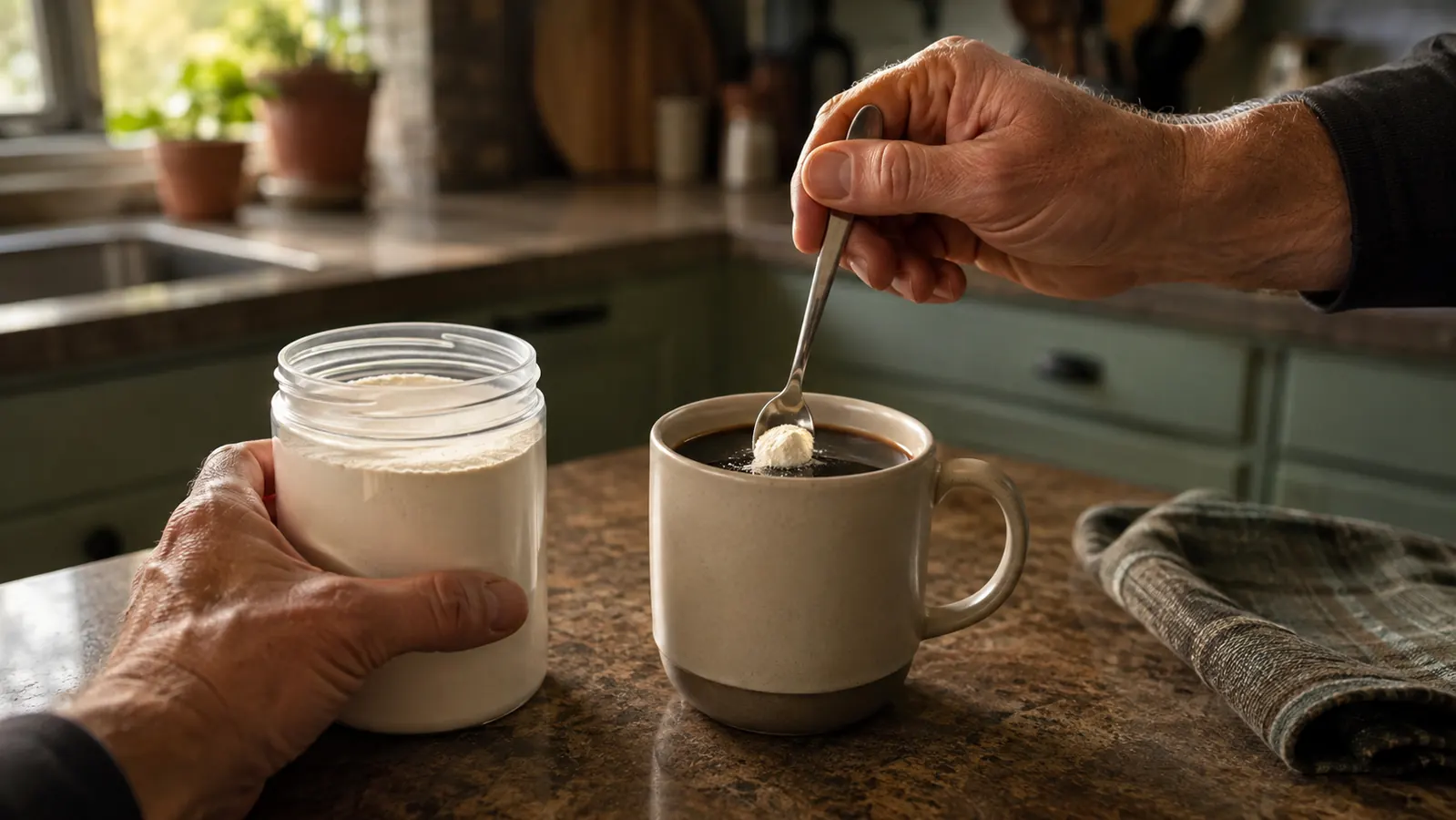
The routine is simple: one scoop of Sports Research Collagen Peptides in my morning coffee, every day, for twelve weeks. The tub is unflavored, so it does not change the taste of the coffee at all. I stir it in while the coffee is still hot, and it dissolves completely. No clumps, no grit, no film on top. That sounds like a small thing, but it is the whole reason I kept using it. A supplement you have to choke down does not get taken. The first morning, I stirred the scoop in and waited for it to clump the way cheaper powders do. It did not. I checked the bottom of the mug twice because I did not believe it, and there was nothing there. That was the first week of February. Twelve weeks later, at the end of April, I was still doing the same thing: coffee first, then one scoop, then a few stirs. The collagen goes in the mug before the softgels I take with breakfast, because those need food. The collagen just needs coffee.
I did not count the collagen toward my protein target. Collagen is not a complete protein, so I treated it as a support supplement, not a protein replacement. My daily protein goal is around 130 grams, which my doctor agreed with, and I hit that with food and a whey shake on lifting days. The collagen was extra, on top of that, not part of it. If I counted it, I would be fooling myself, because the amino acid profile is not the same as a complete protein. I also did the thing I always tell readers to do: I asked my doctor first. Collagen is generally well tolerated, but anyone with kidney concerns or who takes medication should have that conversation before starting any supplement. My doctor had no concerns, so I started the eight-week test. It turned into twelve weeks because I did not want to stop. That is the honest reason: not a dramatic result, just a supplement that fit my morning without any fuss.
On lifting days, the collagen is still just the coffee scoop. The whey comes later, after the rec center, in a shaker bottle with 2% milk. The collagen never changes. That separation is part of my method: when one thing changes, I know what to credit. If I had started the collagen and anything else the same week, I could not tell you which one did what.
What Nobody Tells You About Collagen
Here is the honest part. Collagen is one of the most oversold supplements on the shelf, and the marketing makes it sound like a fountain of youth in a tub. The research is more modest. Studies link collagen peptides to support for joint comfort and skin elasticity, but the effects are gradual and the evidence is not the same as the evidence for, say, creatine or protein. Nobody should expect a creaky knee to turn silent in a week.
I read the studies I could find before I started, the same way I read up on creatine. The honest summary is this: there is some evidence that collagen peptides can support joint comfort over months of daily use, and there is a lot of marketing that stretches that evidence into promises. If a tub claims your joints will feel new in days, put it back on the shelf.
What nobody tells you is that the boring details matter more than the brand. You have to take it daily, you have to give it months, and you have to keep doing the actual work of training and eating enough protein. Collagen is a support, not a substitute. If you are not lifting, not sleeping, and not eating protein, no powder is going to fix that. I have said that about every supplement on my shelf, and it is true here too.
The other thing nobody tells you is that the experience matters. A supplement you take for three days and forget is worth nothing. The reason I finished twelve weeks is that this one cost me zero effort. No taste, no texture, no measuring cup, no blender. That is a real part of whether a supplement works, because a supplement only works if you actually take it. And here is one more thing nobody tells you: maybe is a hard word to sit with. We want supplements to be either a clear yes or a clear no. After twelve weeks, my answer is a quiet maybe, and I have learned to be comfortable with that. A quiet maybe for a supplement that costs me no effort and no stomach trouble is a reasonable trade. A quiet maybe for a supplement you hate taking is a waste of money.
After a couple of months my knees felt a little less creaky on the porch stairs. I will say it plainly: I cannot prove that was the collagen.
The Results After 12 Weeks
I log my lifts, bodyweight, and how I slept in a spiral notebook. That is my method: one new supplement at a time, at least eight weeks, honest notes. For the collagen, the notes look like this. My knees felt a little less creaky on the porch stairs after a couple of months. That is the main change I noticed, and it was gradual. I did not wake up one morning with new knees. I just realized one day that I was not bracing myself on the railing the way I used to. The notebook entry from the end of April says it better than I can now. Weight: 185. Sleep: fine. Knees: less creaky on the stairs, started noticing around week eight. Lifts: up a couple of reps on leg press and seated rows. Cause: training, protein, consistency. Collagen: possible support, cannot confirm. That last line is the one I would underline for you, because it is the difference between an honest review and a sales pitch.
The day I noticed was a Tuesday in late March, about eight weeks in. I came up the porch stairs with a bag of groceries in each arm and did not grab the railing. I stopped on the landing and thought about it, because that was new. I wrote 'less creaky, cannot confirm cause' in the notebook that afternoon. That sentence is still there. I am not going to upgrade it now that more weeks have passed.
My lifts did not change because of the collagen. My leg press and seated rows went up over those twelve weeks, but I was also consistent with my training and my protein, so I credit the work, not the powder. Bodyweight stayed around 185 pounds. Sleep stayed the same. I had no stomach trouble, which surprised me, because some powders sit heavy. The collagen was not hurting anything, and it may have been helping my joints feel a bit better. That is the honest ceiling of what I can claim.
Joanne started taking it too, same tub, one scoop in her coffee. After about six weeks she mentioned her hands felt a little less stiff in the morning, then she pointed out that the weather had turned warmer and wrote it off as maybe. We are both realists about this stuff. We did not expect a transformation, and we did not get one. We got a small, pleasant shift that might have been the collagen and might have been time.
What I Liked
- Unflavored, so it disappears into coffee with no taste and no texture
- Dissolves completely in hot liquid with just a spoon, no blender needed
- Easy to stick with: one scoop a day, tub sits right by the coffee maker
- Short ingredient list and a strong Amazon rating with tens of thousands of reviews
- No stomach trouble even taken daily for twelve weeks
Where It Falls Short
- Results are gradual and modest at best; I cannot prove it helped my knees
- Price per serving is high, and a tub runs out faster than you expect
- Not a complete protein, so it cannot replace whey or food protein
- The evidence for collagen is thinner than the evidence for creatine or protein powder
- You have to take it daily for months to give it a fair test, and the answer may still be maybe
What I Like About Sports Research Collagen
The unflavored formula is the standout. I have read plenty of reviews of flavored collagens that say they taste like sweetener no matter what you mix them into. The Sports Research unflavored version disappears into coffee, broth, or yogurt. That matters more than people think, because the supplement you actually take is the one that works.
It also dissolves completely in hot coffee. That is not true of every collagen on the market. Some powders clump, some leave a film, some need a blender. This one just needs a spoon and a few seconds of stirring. For a 63-year-old who is not interested in extra steps, that is a real feature.
The tub is also practical. It sits on my kitchen counter next to the coffee maker, and the scoop is right there. No measuring, no mess, no thinking required at 6:30 in the morning. The brand has a good reputation and the tub has tens of thousands of reviews on Amazon with a strong star rating, which counts for something, but I am more interested in what happened in my own notebook.
I also like that the ingredient list is short. I read labels the way I read food labels, and this one does not have a paragraph of things I cannot pronounce. It is collagen peptides, full stop. That is the whole pitch. For a supplement I take every day, a short label is a feature, because there is less to second-guess.
The Tradeoffs and What I'd Change
The biggest tradeoff is the price per serving. Collagen is not cheap, and you have to take it daily for months to give it a fair test. A 16-ounce tub runs out in about six weeks at one scoop a day, so this is a recurring cost, not a one-time purchase. I am not going to pretend the cost is nothing, because it is not.
Before this tub, Joanne had bought a canister of Vital Proteins and I used part of it. It was fine. The reason we switched is that the Sports Research unflavored version mixed a little cleaner in hot coffee and the price per serving worked out better for us. I am not here to run down Vital Proteins. It is a popular brand for a reason. This one just fit our morning better.
The second tradeoff is expectation management. If you buy this expecting your joints to feel brand new in two weeks, you will be disappointed. I was not disappointed, because I did not expect that. I expected a possible small shift over a couple of months, and that is exactly what I got. I think that is true of most collagen, not just this one, but it is worth saying clearly because the marketing does not say it.
The third thing is that collagen is not a complete protein, so it should not replace your whey or your food. I see people online treating collagen as their main protein source, and that is a mistake. It is a support supplement. Your protein target still comes from food and a complete protein powder. If you can only afford one powder, buy the whey. That is the one that builds muscle. Collagen is the one that might help your joints feel a bit better. If I could change one thing, it would be the tub size. Sixteen ounces sounds generous until you are scooping it every day, and it runs out in about six weeks. I would happily take a larger size to avoid reordering so often. That is a small gripe, and it tells you how the test went: my only real complaint is that the tub does not last longer.
Who This Is For
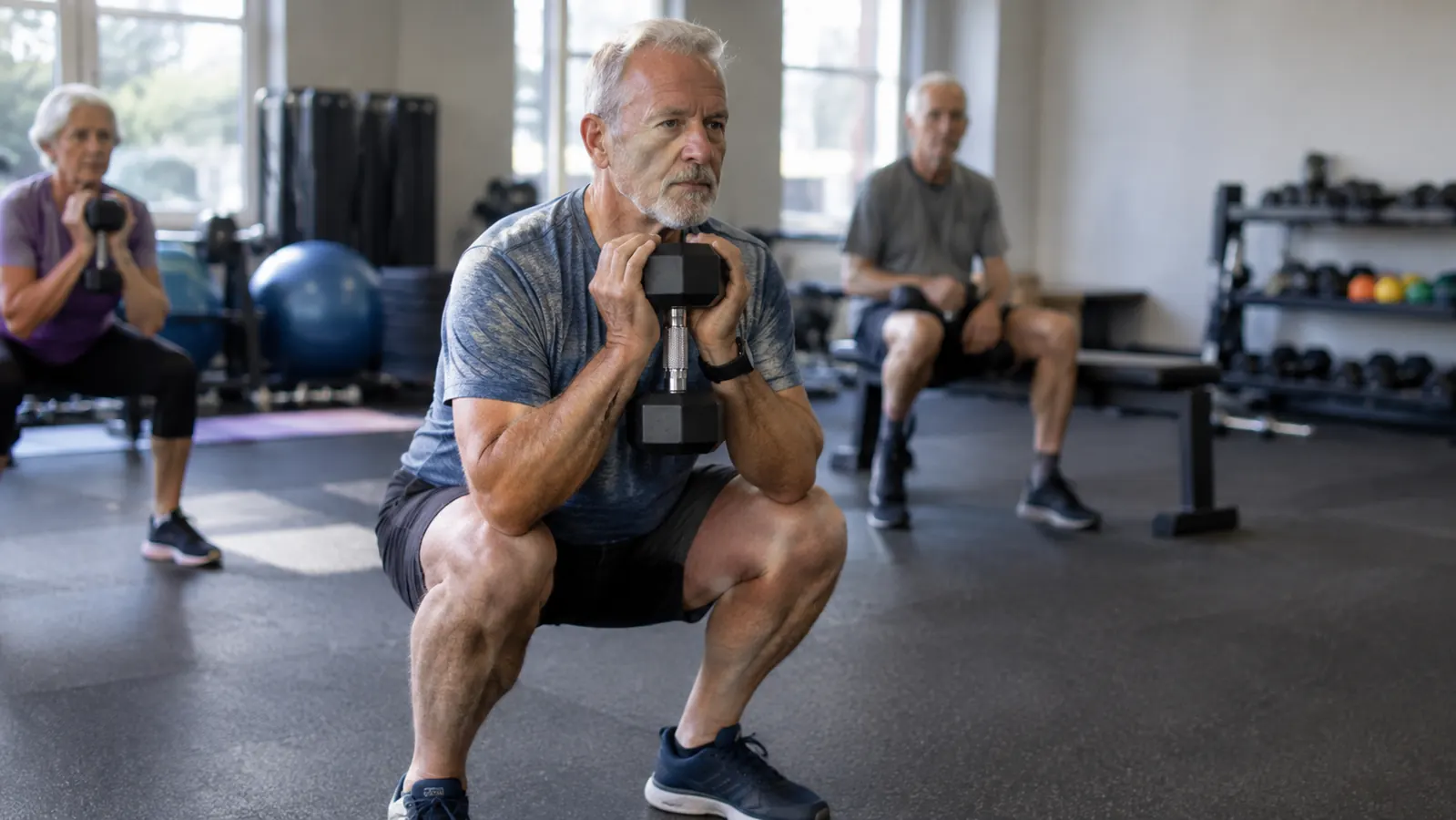
This is for the person who is already doing the work: lifting, walking, eating enough protein, sleeping. If you are consistent with the basics and you want to add something that might support your joints, Sports Research Collagen Peptides is a reasonable, clean option. It is also for people who hate flavored supplements, because the unflavored version genuinely disappears into coffee. And it is for people who understand the word might, because that is the honest size of the promise.
Who Should Skip It
Skip it if you are looking for a quick fix or if you are not consistent with the basics. If you are not training, not eating protein, and not sleeping, collagen is not going to save you. Skip it if you are on a tight budget and have to choose between collagen and a complete protein powder, because the protein powder will do more for your lifts. And if you have kidney concerns or take medication, talk to your doctor before you start, the same way I did. Collagen is generally well tolerated, but generally is not for everyone.
My honest bottom line after 12 weeks
It is not magic, but it is clean, easy to take, and I plan to keep the tub on my counter. If you want to try it for yourself, today's price is on Amazon.
Amazon Check Today's Price on Amazon →