

If you are over 50 and lifting, you have probably stared at the same two tubs I stared at: Optimum Nutrition Gold Standard Whey and Dymatize ISO100. Both are whey. Both are popular. Both have tens of thousands of Amazon reviews. So which one is actually better for an older lifter who just wants to hold onto muscle, hit a protein target, and not feel like he swallowed a milkshake? I have been asked that question by the guys at the rec center more times than I can count, and the honest answer is messier than the marketing suggests. The short version is this: for most of us over 50, the whey blend is the better buy, and the isolate only earns its price for a specific kind of person.
I am Curtis Hollander, 63, a retired letter carrier in Chattanooga, Tennessee. I walked a mail route for 31 years, and after I retired I noticed I was losing strength in ways that bothered me. Carrying groceries up the porch steps got harder. Getting up off the floor got harder. I started lifting at 60, three mornings a week at the community rec center, and at 61 my son Daniel suggested Optimum Nutrition Gold Standard Whey after I admitted I was eating toast and coffee for breakfast and not much protein the rest of the day. I have used it nearly every lifting morning since, and I have never owned a tub of Dymatize ISO100. So here is the honest setup for this comparison: everything I say about Dymatize comes from its label, its listing, and what other lifters at the rec center tell me. Everything I say about Optimum Nutrition comes from two years of shakes after every lifting session, a spiral notebook where I log my lifts and bodyweight, and a doctor who agreed with my protein target. I am not a nutritionist and I am not paid by either company. I am just a guy with a notebook and a pantry shelf, and I would rather tell you the truth than sell you a tub.
| Optimum Nutrition Gold Standard Whey | Dymatize ISO100 | |
|---|---|---|
| Protein per scoop | 24 grams from a whey protein isolate and concentrate blend | 25 grams, almost entirely whey protein isolate |
| Carbs and fat | 3 grams carbs, 1.5 grams fat per scoop | About 1 gram carbs, 0.5 grams fat per scoop |
| Mixing | Smooth in a shaker bottle in a few seconds, no clumps | Very smooth, mixes easily, though I have not tested it myself |
| Taste | Tastes like chocolate milk with 2% milk, thinner with water | Reported to be sweet and mild, mixes well with water |
| Digestion | No stomach trouble for me in two years of lifting-day use | Isolate is often easier for sensitive stomachs, but I cannot verify that from my own experience |
| Price per serving | Generally the more budget-friendly option per serving | Usually costs more per serving than a standard whey blend |
| Best for | Older lifters who want one reliable daily shake that fits a protein target | Lifters who want the lowest carbs and fat and are willing to pay more |
Where Optimum Nutrition Gold Standard Whey Wins
The biggest win for Optimum Nutrition is the price per serving. A 2-pound tub of Gold Standard Whey has been my post-workout shake for two years, and it is simply the more budget-friendly way to hit a protein target. When you are 63 and trying to get around 130 grams of protein a day, the cost of that habit matters. I would rather spend the difference on chicken, eggs, and Greek yogurt than on a few extra grams of isolate. My doctor and I settled on 130 grams after my yearly checkup. Before the whey I was probably getting half that: a light breakfast of toast and coffee, a sandwich at lunch, whatever Joanne cooked for dinner, and nothing in between. No wonder my lifts were stalling. In my first months at the rec center I logged every session in my spiral notebook, and the numbers tell the story. The leg press would creep up a little, then stall for weeks. I was showing up, doing the work, and under-eating protein hard. The first morning I tried the whey, I shook it with 2% milk in the kitchen while Joanne watched, and she said it smelled like a milkshake. That was two years ago and the routine has not changed. The whey did not build the muscle by itself, but it made the protein target reachable without me having to chew my way through four extra meals a day.
The second win is taste and everyday practicality. Mixed with 2% milk, Gold Standard Whey in Double Rich Chocolate tastes like chocolate milk. With water it is thinner and flatter, which is why I use milk. It mixes in a shaker bottle in a few seconds with no clumps. The tub lives on the pantry shelf, the shaker bottle lives in the dish rack, and the routine is the same every lifting morning: drive home from the rec center, scoop the powder, pour the milk, shake it a few times, and drink it while I put my gym bag away. I keep the scoop level, not heaped, because the serving size on the label is one level scoop and I trust that over my eyeballing. On non-lifting days I do not usually bother with the shake, unless I know I am short on protein. I have had zero stomach trouble in two years, which matters more at 63 than it did at 30. A protein powder only works if you actually drink it every day, and this is the one I actually drink every day. A couple of the younger guys at the rec center have tried fancier powders, and more than one has ended up with a half-full tub in the back of the cabinet. I have never had that problem. The taste is the reason. If a shake tastes like a chore, you will stop drinking it by the second week.

Where Dymatize ISO100 Wins
Dymatize ISO100 wins on the numbers that matter if you are counting every gram. It is almost entirely whey protein isolate, with about 25 grams of protein per scoop and only about 1 gram of carbs and 0.5 grams of fat. That is a cleaner macronutrient profile than Gold Standard Whey, which is a blend of isolate and concentrate and carries about 3 grams of carbs and 1.5 grams of fat per scoop. If you are on a strict low-carb plan or you count macros closely, ISO100 is the better fit on paper. One of the younger guys at the rec center, a former cross country runner in his forties who watches his waistline, switched to ISO100 for exactly that reason. He does his shakes with water and says he cannot tell the difference, which is more than I can say for Gold Standard with water. He told me he likes that a shake can be pure protein without feeling like part of a meal. I do not count macros that closely. At my age the bigger risk is under-eating, not an extra two grams of carbs. But I respect the numbers, and if you are the kind of person who tracks everything, the cleaner profile is real.
Dymatize ISO100 also wins on the digestion question, at least in theory. Whey protein isolate is processed to remove most of the lactose and fat, which is why it is often recommended for people with sensitive stomachs. I cannot verify that from my own experience because I have never owned a tub. But the label and the chemistry support it, and if you know dairy gives you trouble, isolate is the safer bet. I read the ingredients on both labels side by side one afternoon at the kitchen table. The difference is real: ISO100's ingredient list is shorter, and the protein source is almost entirely isolate, while Gold Standard Whey uses a blend that includes concentrate. For most people that blend is a feature, because it keeps the price down and the flavor up. For someone with a sensitive gut, it can be a reason to reach for the isolate instead. I would just not assume you are that person until you have tried the cheaper tub first. Stomach trouble with protein powder is not always the lactose. Sometimes it is the sweetener, sometimes it is how fast you drink it, sometimes it is the milk you mix it with. If you want to know for sure, buy the smaller tub first and give it two weeks.
The whey I have actually stuck with for two years
Optimum Nutrition Gold Standard Whey is the shake I have used nearly every lifting morning since I was 61. It mixes clean, tastes like chocolate milk with 2% milk, and made my daily protein target easy to reach. Check today's price on Amazon and see if it fits your routine.
Amazon Check Today's Price on Amazon →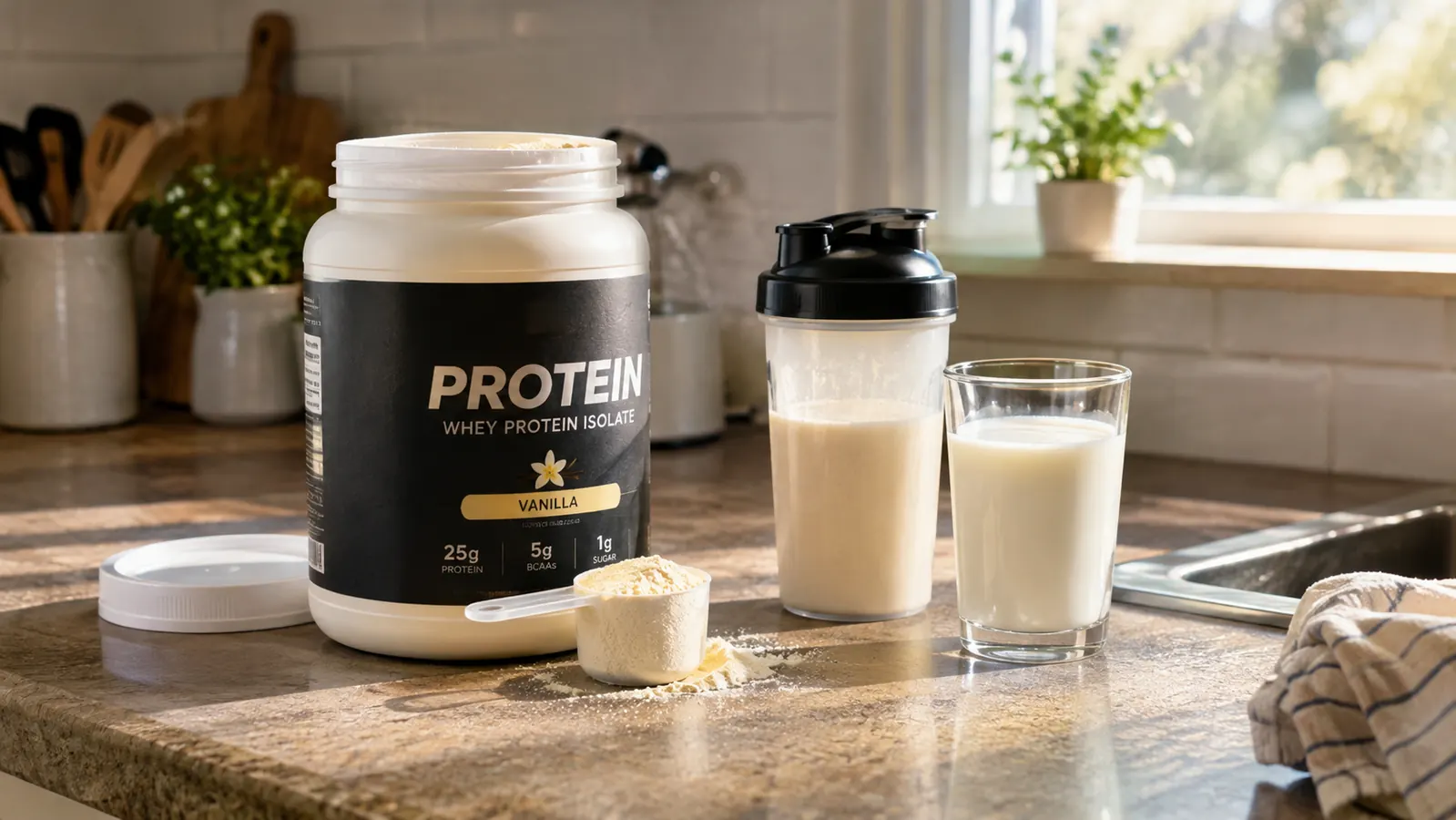
Who Should Buy Which
Buy Optimum Nutrition Gold Standard Whey if you want one reliable daily shake that fits a protein target without breaking the bank. That is the situation most older lifters are in. We are not bodybuilders cutting for a show. We are trying to hold onto muscle, recover from three sessions a week, and get enough protein without turning food into a math problem. My routine is simple: leg press, goblet squats with a dumbbell, seated rows, chest press, and farmer carries, three mornings a week. The whey shake comes after, mixed with 2% milk, and lately I have been stirring a scoop of creatine into the same shake because my doctor checked my kidney function and gave me the go-ahead. Gold Standard Whey does that job well, and it is the one I recommend to the guys at the rec center who ask. I tell them the same thing every time: start with the cheaper tub, drink it every day for eight weeks, and see what happens to your notebook. The notebook does not lie. When the protein went up, the reps went up.
Buy Dymatize ISO100 if you are counting every gram of carbs and fat, or if you know whey concentrate bothers your stomach. It is the more refined product on paper, and for some people that is worth the higher price per serving. But I would not switch just for the extra gram of protein. The difference between 24 and 25 grams per scoop is not what decides whether you hold onto muscle at 60. Showing up three mornings a week and actually eating the protein is what decides that. I have a whole spiral notebook that proves it. In the first months, before I fixed my protein, my lifts crept up slowly and then stalled. Once I started hitting around 130 grams a day, the same weights started moving more steadily. The powder mattered, but the habit mattered more. If the choice is between a cheaper whey you will drink every day and a fancier isolate you will skip on busy mornings, take the one you will actually drink. I would rather see you drink a cheaper shake for a year than a fancy one for a month.
One more thing I tell every older lifter who asks: supplements come after food, sleep, and showing up to train. A whey shake is a tool, not a shortcut. I have now added five supplements one at a time, each with its own eight-week test stretch, and I keep the same rule for all of them: one new thing at a time, log it in the notebook, and ask my doctor first. That last part matters more as we get older, especially if you have kidney concerns or take medication. Protein is generally safe, but the dose that works for a 25-year-old is not automatically the dose for you. I asked my doctor before I started the whey at 61, and I would want you to do the same. He did not have strong opinions about the brand. He had strong opinions about the total protein, about getting it from food first, and about me showing up to train. Joanne takes her own supplements, the collagen and the vitamin D, and she is the one who reminds me that a shake is not a meal. That is the advice I pass along: pick a powder you will actually use, get the protein number your own doctor agrees with, and let the notebook tell you whether it is working.
Start with the whey that is easy to stick with
Two years in, Optimum Nutrition Gold Standard Whey is still the shake in my pantry. If you are an older lifter who wants a practical daily protein habit, check today's price on Amazon.
Amazon Check Today's Price on Amazon →