
Retirement did something to my body I did not expect. After 31 years walking a mail route in Chattanooga, I figured my legs would be the strongest part of me for life. Instead, a couple of years after I hung up the satchel, simple things got harder. Carrying the groceries up the porch steps. Getting up off the floor after tying my shoes. I was 60, about 185 pounds, and shrinking in slow motion.
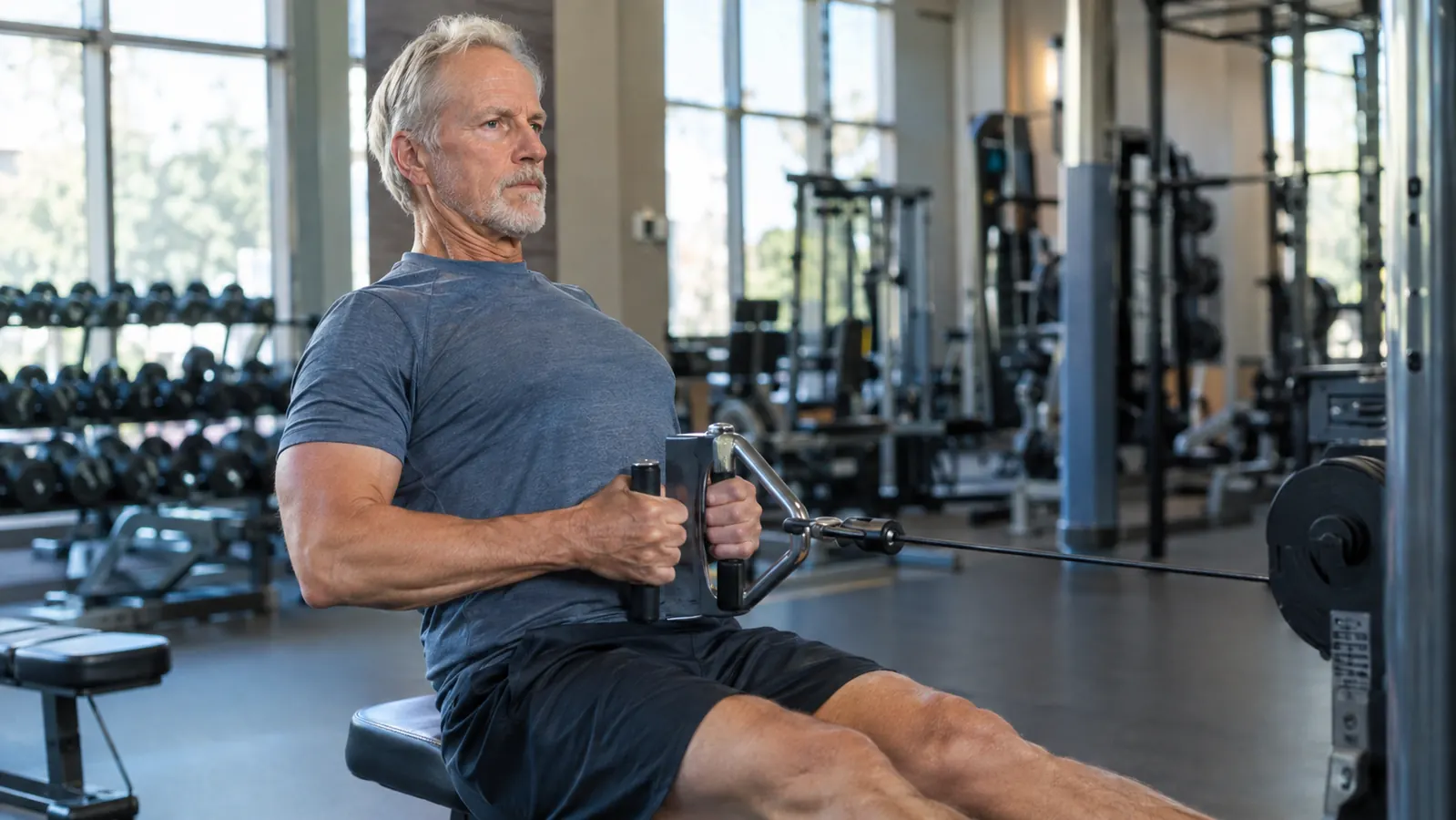
That was the year I started lifting at the community rec center. Monday, Wednesday, Friday. Leg press, goblet squats with a dumbbell, seated rows, chest press, and farmer carries. I kept a spiral notebook with every lift and my bodyweight, and told my doctor exactly what I was doing. He said go ahead. Then he asked what I ate.
That question caught me. Breakfast was toast and coffee. Lunch was often a sandwich. Dinner was fine, but it was the only meal with real protein in it. My son Daniel, who lives in Atlanta, heard me describe a typical day and said, Dad, that is the problem. He had been lifting for years. He sent me a link to Optimum Nutrition Gold Standard Whey and told me to try one scoop after my workouts.
I told my doctor before I bought it. I always do. He looked over my numbers, said a scoop of whey after lifting was a reasonable way to close the gap, and reminded me that food comes first. So at 61, for the first time in my life, I owned a tub of protein powder. I tested it the way I test everything: eight weeks, one new thing, nothing else changed.
The routine was simple. Lifting mornings, after I got back from the rec center, one scoop of Optimum Nutrition Gold Standard Whey shaken with 2% milk in my shaker bottle. It mixed in a few seconds with no clumps. With milk it tasted like chocolate milk, which surprised me. No stomach trouble, which I half expected at my age. The first week I wrote in my notebook: so far, so good.
We settled on about 130 grams of protein a day. Before the whey, I was lucky to hit half that. That was the gap.
See the whey that closed my protein gap
Optimum Nutrition Gold Standard Whey was the first supplement I tested, and it is still the one I reach for on lifting days. It mixes in seconds, tastes like chocolate milk with 2% milk, and makes a daily protein target reachable. Amazon's star ratings and tens of thousands of reviews back it up. Talk to your doctor first, then check today's price.
Amazon Check Today's Price on Amazon →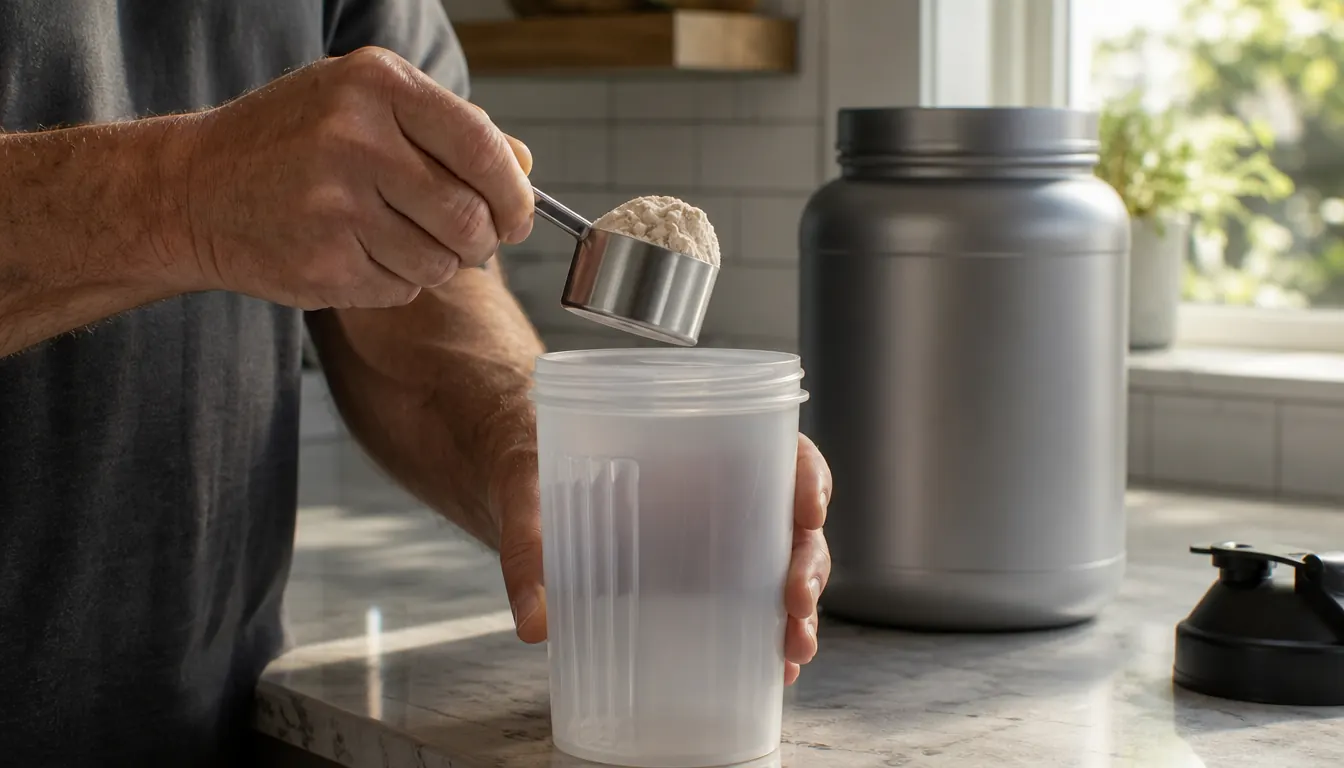
The Eight-Week Test
The change was not dramatic. Nothing about this has been dramatic, and I think that is the honest part. By the third week I was getting an extra rep or two on the leg press at the same weight. By week six the extra reps were showing up on seated rows too. My notebook does not lie, and neither does the scale: my lifts climbed more steadily in those eight weeks than they had in the whole year before, because I finally stopped under-eating protein.
The doctor and I settled on about 130 grams of protein a day for a man my size who lifts three times a week. That is a lot of food. Try getting there on chicken and eggs alone and you will see why a shake earns its place. I still eat real food first. Eggs at breakfast, chicken at dinner, Greek yogurt most afternoons. The shake fills the gap on lifting days, and on days I am short, one at lunch fixes it.
Two years in, the whey is just part of the routine. The tub lives on the pantry shelf. Lifting mornings, after the rec center, one scoop with 2% milk in the shaker bottle. It is not exciting. That is exactly the point. Supplements are the support, not the star. The star is showing up three mornings a week and writing it down. The whey just makes sure the work I do has the protein to build on.
I have tested a few other supplements since, one at a time, at least eight weeks each, and all with my doctor's blessing. Some did nothing I could feel, and I say so plainly. But the whey was first, and it is the one I would keep if I could keep only one. Not because it is special. Because it fixed the thing I did not even know was broken: a daily protein gap I had carried for years without noticing.
The practical details matter at my age. The shaker bottle lives in the dish rack so it is always clean. The tub stays on the pantry shelf, out of the way. I mix one scoop with cold 2% milk, give it a few shakes, and it is ready before I have my shoes off. No clumps, no chalky finish, no cleanup drama. That matters when you are 63 and your mornings are a little slower than they used to be.
What I'd Tell You If We Were Sitting at My Kitchen Table
If we were sitting at my kitchen table, here is what I would say. Supplements come after food, sleep, and showing up to train. If you are over 50 and your breakfast looks like mine did, toast and coffee, take a hard look at your protein before you buy anything. Ask your doctor first, especially if you take medication or have kidney concerns. He checked my numbers before I started, and I think that is the right order for anyone. And if you try a protein powder, give it eight weeks and write it down. Do not judge it by the first week. Judge it by the notebook.
One more thing. I am 63, I weigh about 185 pounds, and my knees complain a little on the porch stairs. None of that stopped me from adding weight to the leg press last month. The protein did not do it alone. But I can tell you this: it was a lot harder to make progress when I was running on toast and coffee.
The same fix I still use on lifting days
Optimum Nutrition Gold Standard Whey is the supplement I tested first and still use on lifting days. It mixes in seconds, makes a daily protein target reachable, and tastes like chocolate milk with 2% milk. Talk to your doctor first, then check today's price.
Amazon Check Today's Price on Amazon →