
I turned 63 this year, and I still remember exactly when I realized I was losing strength. I was a letter carrier in Chattanooga for 31 years, and after I retired I noticed that carrying a bag of groceries up the porch steps got harder. Getting up off the floor after fixing a kitchen cabinet hinge took a real effort. So at 60 I started lifting three mornings a week at the community rec center, and I started paying attention to protein. My doctor had told me I needed more of it, and my son Daniel put it bluntly: I was eating toast and coffee for breakfast and not much protein the rest of the day. This is the plan that fixed that, and Optimum Nutrition Gold Standard Whey is the reason it worked.
If you are over 60 and lifting, or just trying to keep your strength for everyday life, you have probably heard you need more protein than you used to. The hard part is actually getting it. Whole food is the foundation, but there are only so many eggs and chicken breasts I can eat in a day. A whey shake made the difference between falling short and hitting my target, and it took about two minutes a day. Here is how I did it, what I learned in eight weeks of testing, and the exact routine I still use.
The shake that made 130 grams of protein a day actually easy
Optimum Nutrition Gold Standard Whey mixes in seconds, tastes like chocolate milk with 2% milk, and gave me a reliable way to close the protein gap every single day. It is the supplement I have recommended to more friends at the rec center than any other.
Amazon Check Today's Price on Amazon →Step 1: Figure Out Your Number First
Before I bought any protein powder, I asked my doctor how much protein I actually needed. He ran through the standard guidance for an older man who lifts: roughly 0.6 to 0.7 grams per pound of bodyweight, which for me at around 185 pounds came out to about 120 to 130 grams a day. He agreed that 130 grams was a reasonable target. That number mattered, because it gave me something to aim at instead of a vague sense that I should eat more protein.
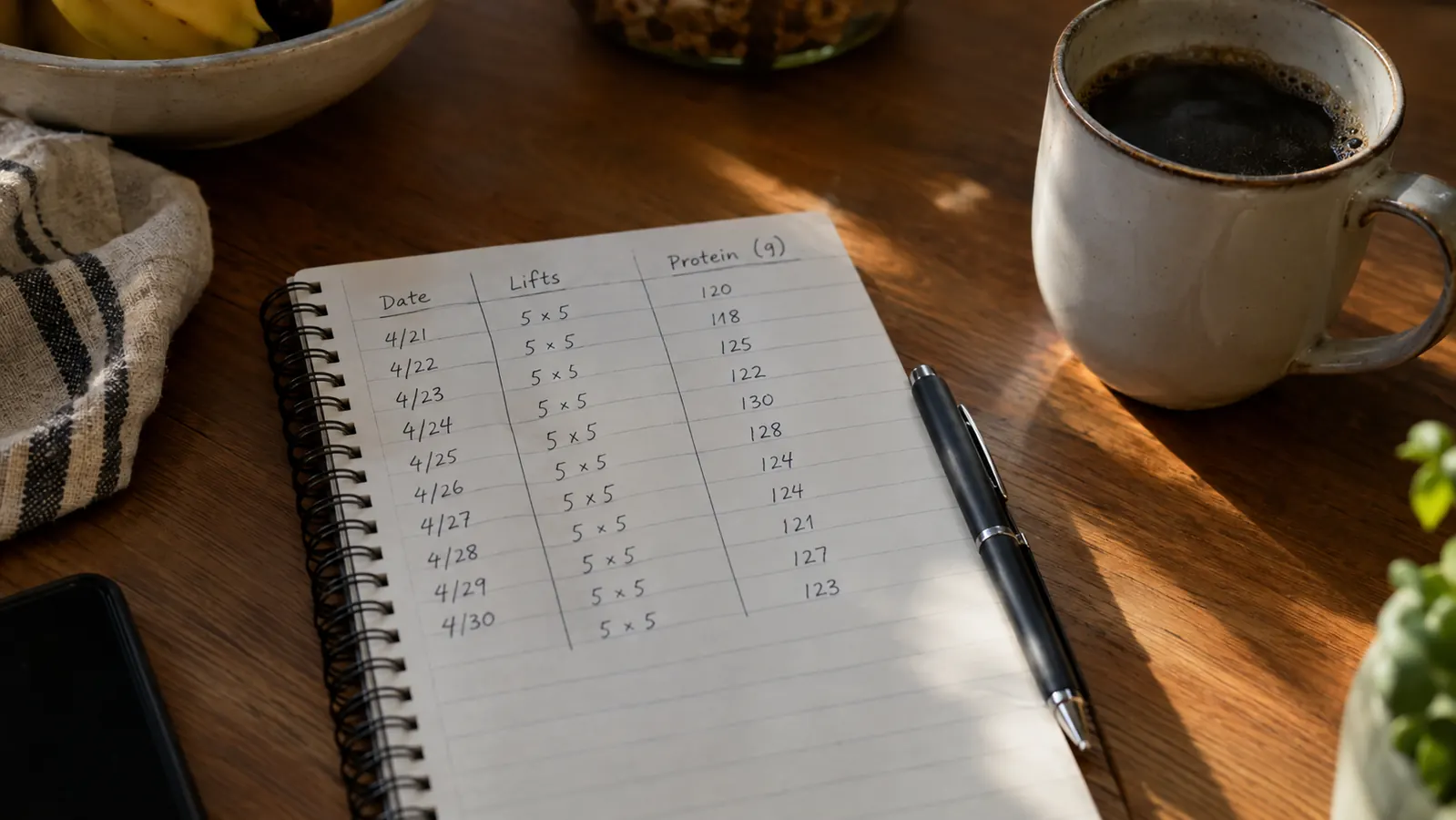
I started keeping a spiral notebook where I wrote down my bodyweight, my lifts, and roughly what I ate. I did not weigh food or count every gram obsessively. I just wrote down the big sources: eggs at breakfast, chicken or beef at dinner, a shake after lifting. Within a week I could see the pattern. On days I did not have a shake, I was landing around 90 grams, even after fixing breakfast. On days I did, I was over 120. That gap is exactly what whey closed for me.
Your own number may be different, and that is fine. The point is to get a number from your own doctor, especially if you have kidney concerns or take medication. Protein targets are not one-size-fits-all, and the right number for me is not automatically the right number for you.
Here is how my number breaks down on a normal lifting day, so you can see it is not complicated. Breakfast is two eggs and a bowl of Greek yogurt, which gets me somewhere around 30 grams. Lunch is usually a turkey sandwich or leftover chicken, another 30 or so. Supper is whatever Joanne and I cook, and a palm-sized piece of chicken, pork or beef gets me close to 35. That leaves me around 95 grams from food. The Optimum Nutrition Gold Standard Whey shake after the rec center, made with 2% milk, covers most of the rest. On paper it looks easy. Before I wrote it down and fixed breakfast, I was eating closer to 70 grams and had no idea.
Step 2: Pick a Whey You Will Actually Drink Every Day
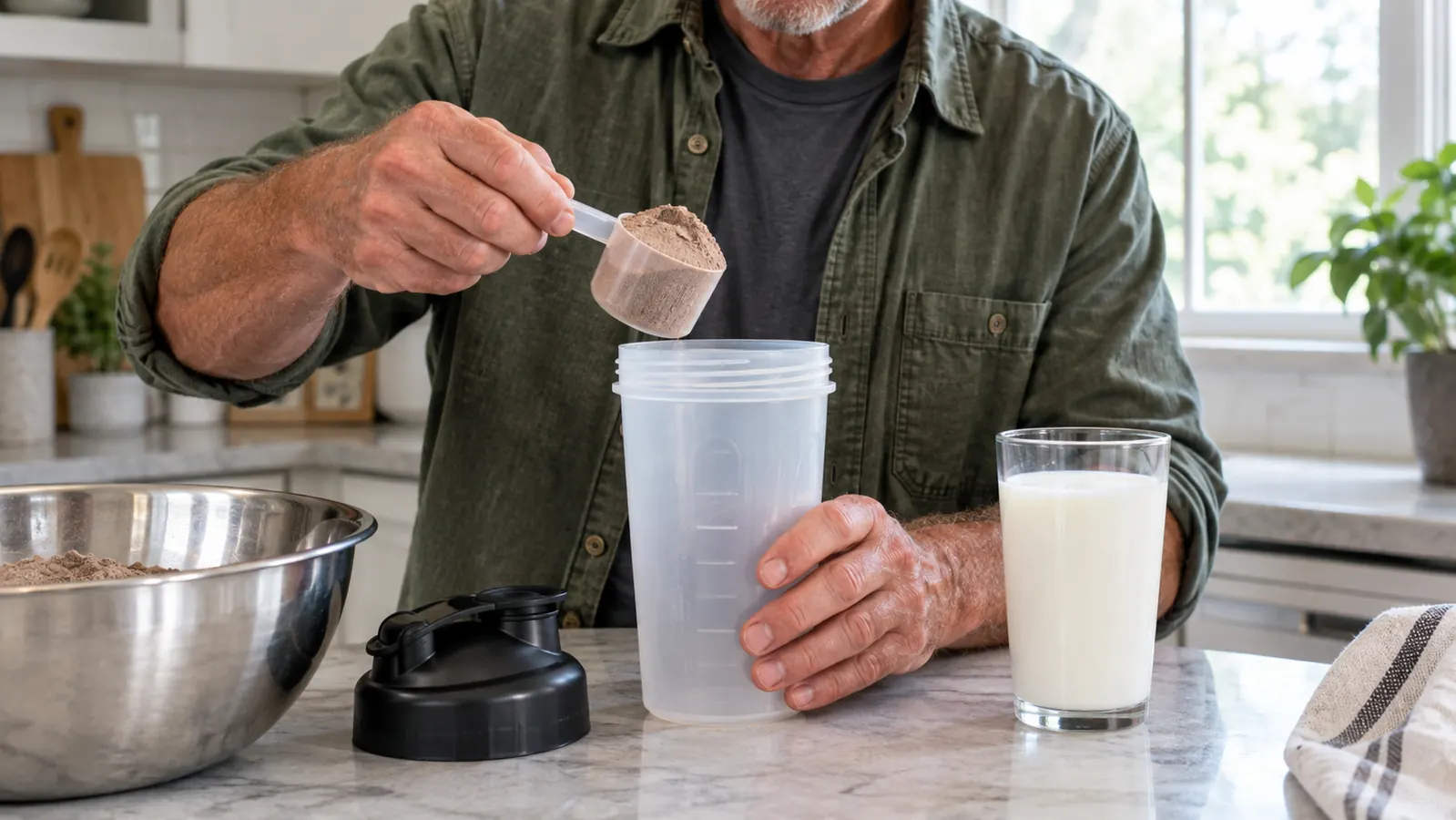
My son Daniel suggested Optimum Nutrition Gold Standard Whey after I admitted my breakfast was toast and coffee. I had never used a protein powder before, so I did not have strong opinions. I just knew I needed something that would mix fast, taste fine, and not sit in the pantry because I dreaded it. I chose the Double Rich Chocolate flavor and a 2 pound tub, and I have been through several tubs since.
The practical details matter more than you would think. One scoop shaken with 2% milk in a shaker bottle mixes in a few seconds with no clumps. It tastes like chocolate milk, which is why I use milk instead of water. With water it is thinner and flatter, and I found I was less likely to finish it. No stomach trouble, which was my biggest worry, because I had never been a supplement person.
I will say the honest part: a protein powder only works if you actually drink it. The best-reviewed tub in the world does nothing if it tastes like chalk to you. If chocolate is not your flavor, Optimum Nutrition makes other flavors, and it is worth picking one you genuinely like. This is a daily habit, not a one-time purchase.
If you are worried about your stomach, start smaller than you think. The first week I drank the shake slowly, sitting down, just to see how it sat. It sat fine. A lot of people our age find milk itself is the problem, not the whey. If dairy bothers you, talk to your doctor before you buy anything, because a whey isolate or a different protein may suit you better. I got lucky. Optimum Nutrition Gold Standard Whey never gave me any trouble, even on mornings when I drank it fast in the car.
Step 3: Anchor the Shake to a Habit You Already Have
The trick that made this stick was not willpower. It was anchoring. I lift Monday, Wednesday, and Friday at the rec center, and my routine is the same every one of those mornings: I finish my workout, drive home, and make a shake with one scoop of whey and 2% milk. The shaker bottle lives in the dish rack, the tub lives on the pantry shelf, and I do not have to think about where anything is.
On non-lifting days I do something slightly different. I do not need the shake right after a workout, so I only have one at lunch on days I know I am short on protein. That keeps the habit flexible instead of rigid. Some weeks I have four shakes, some weeks I have six. The goal is not a perfect schedule. The goal is hitting 130 grams more days than not.
This is the part most advice skips. Everyone tells you to eat more protein. Nobody tells you how to remember to do it on a Tuesday when you are tired. Anchoring the shake to something you already do, like coming home from the gym or sitting down to lunch, is what turns a good intention into a routine.
Step 4: Build the Rest of the Day Around Whole Food First
I want to be clear about something, because it is the part I tell every friend at the rec center: the whey shake is a bridge, not the whole road. I still eat eggs at breakfast, chicken or beef at dinner, and Greek yogurt or cottage cheese when I want a snack. The shake is what gets me from 90 grams to 130 grams on days when whole food alone is not enough.
There is a reason I do it this way. Whole food gives me things whey does not, like the other nutrients that come along with a piece of chicken or an egg. And whey gives me something whole food does not always give me: a fast, easy, reliable 24 grams of protein that I can drink in two minutes. They are not competing. They are covering for each other.
One note on collagen, since it is popular with people our age. I take collagen too, for my knees, but I do not count it toward my protein target. Collagen is not a complete protein, so I treat it as a separate thing. The whey is what counts.
Step 5: Give It Eight Weeks and Write Down What Changes
I test one supplement at a time for at least eight weeks, and I did the same with whey. I wrote down my lifts and my bodyweight in the same spiral notebook I mentioned earlier. The change was not dramatic, and I want to be honest about that. No supplement is going to transform you in a week. What I noticed was that my lifts climbed more steadily once I stopped under-eating protein. The leg press and seated rows moved up at a pace I could actually track.
The other change was simpler. I stopped guessing at my protein and started knowing it. The whey did not do that, the notebook did, and I will not pretend otherwise. But the combination of more protein and consistent lifting is the only thing I changed in that stretch, and the notebook shows the difference.
Eight weeks is not a magic number. It is just long enough to get past the newness and see whether something is actually working. If you are going to bother testing a supplement, give it a real test. A week is not a test. A tub is a test.
When you look back at your eight weeks, look at the boring numbers first. Did you hit your protein target five or six days a week, or two? Did you make all your lifting sessions? Did your bodyweight stay about the same? In my notebook, the weeks I hit my number were the weeks my leg press and rows went up. The weeks I missed it, usually because of a family visit or a busy stretch, the numbers sat flat. That pattern is the real lesson. The whey is just the tool that made the good weeks easier to repeat.
What Else Helps
Whey got the most attention in my routine, but it was not the only thing that helped me hit my protein number. I drink my shake with 2% milk instead of water, which adds a little protein and makes it taste better. I keep hard-boiled eggs in the fridge for days when I am short. And I eat a real breakfast now, which was the single biggest change from my toast-and-coffee days. My doctor also checks my vitamin D and kidney function at my yearly physical, and I would tell anyone over 60 to do the same before adding protein or creatine to their routine. Supplements come after food, sleep, and showing up to train. That order has never let me down.
The shake is what gets me from 90 grams to 130 grams on days when whole food alone is not enough.
Start with one tub and one scoop at a time
Optimum Nutrition Gold Standard Whey is the supplement that made my daily protein target reachable, and it is the one I recommend to friends who are just starting. Check the current price on Amazon and see if it fits your routine.
Amazon Check Today's Price on Amazon →